Tom
A Man Called OveTom is a railway worker whose physical intimidation and repeated thefts bring him into lasting conflict with Ove. He exploits Ove’s unwillingness to report another person, first over a passenger’s belongings and later over money from a railway carriage. That conflict resurfaces when Ove finds his father’s watch in Tom’s possession: Ove takes it back and hits him once, while Tom later conceals what happened from the other men.
Identity and Introduction
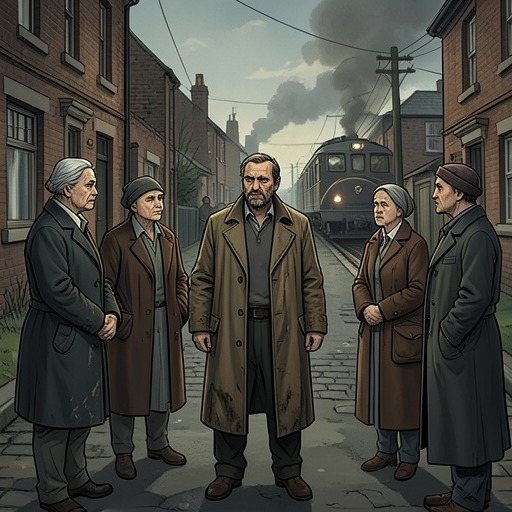
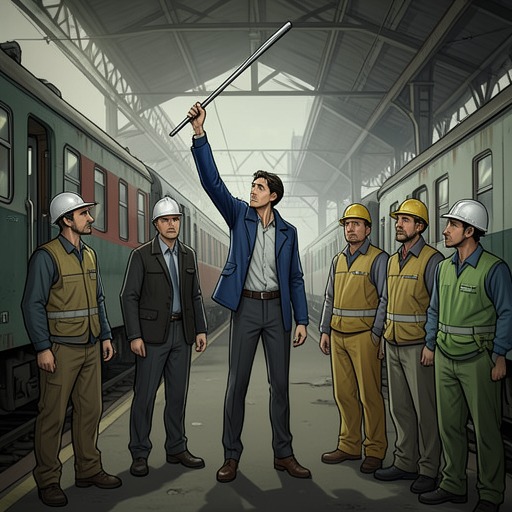
Tom works at the railway yard alongside Ove and is distinguished from the other men there as the one Ove dislikes. He is tall and loud, with an imposing build; the narration presents his attention as habitually drawn to those less able to defend themselves. This description establishes him less through any stated personal history than through the threat his presence poses to others.
Tom’s first defining encounter with Ove takes place when Ove is nine. Ove’s father sends him to help Tom clean out a broken-down railway car. A passenger’s briefcase has fallen from a luggage rack, scattering its contents. Tom immediately gathers what he can and tells Ove that anything found is theirs to keep. Ove’s response is not described as an argument; the encounter instead leaves him deeply uneasy. The episode sets up Tom’s readiness to treat someone else’s loss as an opportunity, and Ove’s resistance to that way of behaving.
Authority and Harassment
After Tom becomes a foreman, his power over Ove becomes more direct. He gives Ove the heaviest and dirtiest assignments, shouts at him, and trips him at breakfast. He also sends Ove beneath railway carriages for inspections and sets the carriages in motion while Ove is there. When Ove escapes harm, Tom mocks him by invoking Ove’s father, who had died. The cruelty lies not only in the dangerous work but in Tom’s use of that bereavement to humiliate him.
Ove does not challenge Tom during this period. He keeps his head down and continues doing his work, believing that meeting his responsibilities matters more than answering provocation. The contrast between them is not simply one of strength: Tom uses his greater size and workplace authority to threaten, while Ove’s restraint is tied to his sense of what a person should do. Tom is the exception among Ove’s railway colleagues, whom Ove otherwise comes to appreciate for valuing work over talk.
Theft and Ove’s Refusal to Inform
The conflict over the railway-carriage money sharpens the distinction between Tom’s conduct and Ove’s principles. Nearly two years after Ove’s father’s funeral, when Ove has just turned eighteen, Tom is caught taking money from a carriage cash box. Ove is the only person who saw him do it, and he and Tom were the only two people in the carriage when the money disappeared. The director tells Ove directly that Tom took the money. Ove does not answer.
Ove’s silence has a concrete cost: he leaves the railway job, which he had liked for its proper tasks, tools, and work. He imagines having to travel far to find another position and worries that the police process may leave him with a criminal record, though the evidence does not establish what happens to Tom afterward. Ove understands his departure as the price of not becoming someone who tells tales. Tom’s theft is therefore central to Ove’s early life not only as an offense but as the circumstance that tests a rule Ove has inherited and chooses to keep.
The Watch and the Confrontation
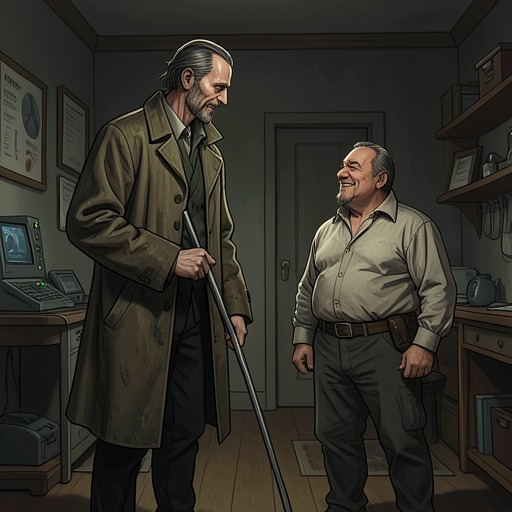
In a later confrontation, Ove discovers that his father’s watch is missing. He searches among the clothes and through the lockers, then goes to the foremen’s changing room, where Tom is standing at a mirror. Ove demands the watch. Tom begins to respond, but Ove cuts him off, takes Tom’s jacket, and retrieves the watch from its inside pocket.
Ove then hits Tom once and walks away. Tom is taken to the hospital; when repeatedly asked what happened, he says that he slipped. The other men in the room also claim not to remember the incident. Their shared silence echoes the earlier dispute over the stolen money, but this time it protects Ove rather than leaving him to bear the consequences alone. The narration does not provide a legal or employment outcome for Tom.
Narrative Role
Tom functions as a recurring test of Ove’s distinction between people who do what they should and people who merely talk—or take advantage of others. His early theft, his conduct as foreman, and the later recovery of the watch connect workplace exploitation to Ove’s private loyalty to his father. The watch gives the confrontation a particular significance: Ove is not pursuing an abstract victory over Tom but reclaiming an object inherited from the person whose standards have shaped him.
The episodes also complicate the contrast between Ove’s restraint and his capacity for force. For years he tolerates Tom’s harassment without reporting or challenging him; when he finds the watch in Tom’s jacket, he acts decisively and then leaves. Tom’s final concealment of the encounter mirrors the reticence that has governed the earlier conflict, but the balance has changed: the men who once left Ove alone with what he knew now refuse to expose what they witnessed.